
One Horned Rhinoceros in India
The Magnificent Greater One-Horned Rhinoceros in India: A
Complete Guide
The Indian subcontinent is home to some of the world's most
spectacular wildlife, but few creatures command respect quite like the greater
one-horned rhinoceros in India. Looking like a magnificent survivor from a
prehistoric era, this armor-plated giant is a true testament to nature’s
resilience.
Once roaming across the entire northern stretch of the
Indian subcontinent, the Indian rhinoceros faced a severe crisis, nearly
sliding into extinction. Today, thanks to decades of dedicated rhino
conservation in India, they are making a legendary comeback.
If you are a wildlife enthusiast planning your next
adventure, here is everything you need to know about the one-horned
rhinoceros in India, its incredible survival story, and the best places to
see them in the wild.
What is the Greater One-Horned Rhinoceros?
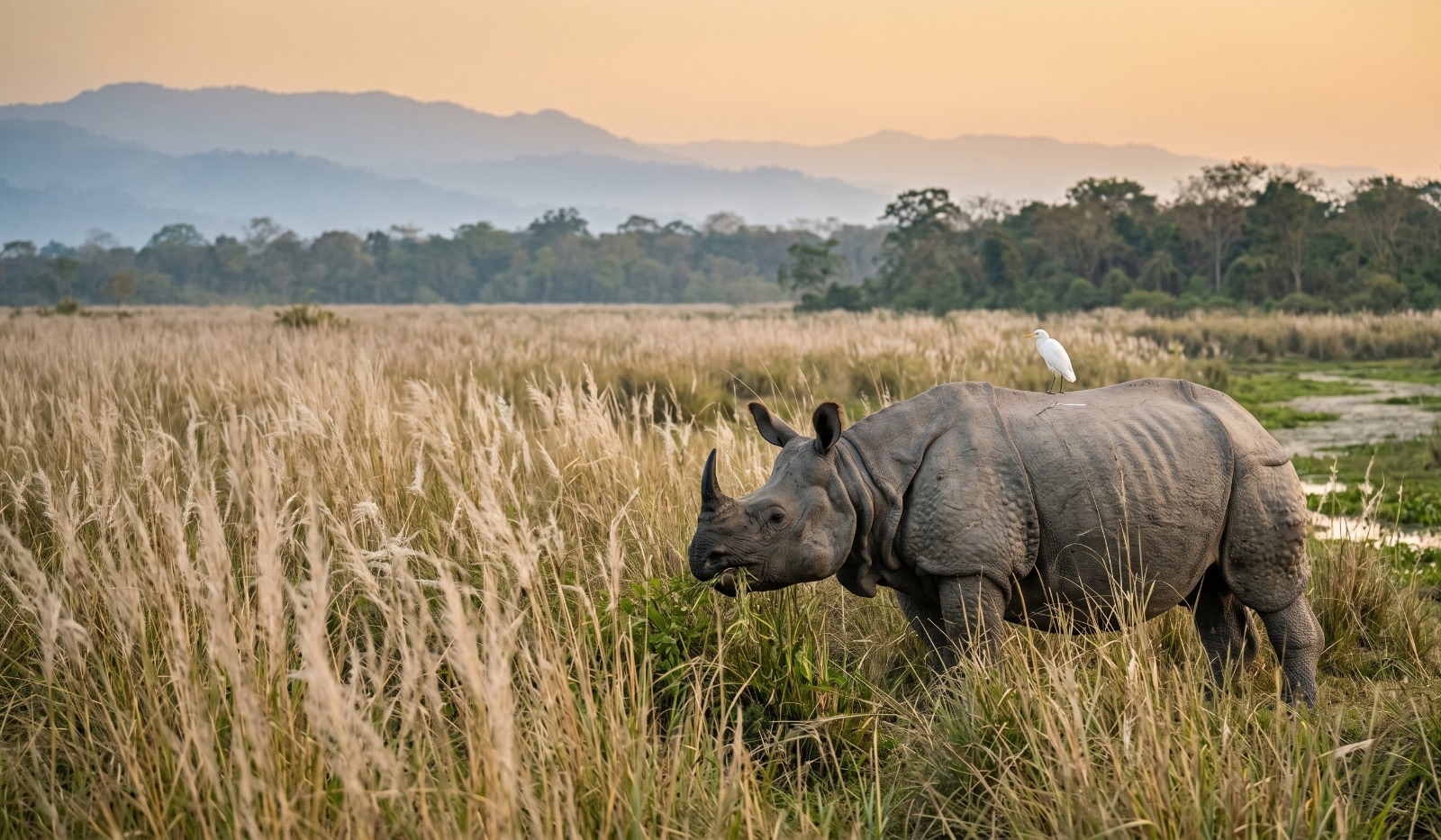
The one-horned rhinoceros in India (Rhinoceros
unicornis) is the largest of all Asian rhino species. Unlike its African
cousins, which sport two horns, the Indian rhino is distinguished by a single
black horn that can grow up to 25 inches in length.
For a layman, the easiest way to identify this incredible
animal is its skin. It looks as though it is wearing a heavy suit of armor.
This appearance is created by massive folds of gray-brown skin studded with
rivet-like bumps. Underneath those heavy folds is a surprisingly agile animal
that can run at speeds of up to 40 km/h and is an excellent swimmer.
- Diet:
Herbivorous (grazers that love tall elephant grass, twigs, and aquatic
plants)
- Weight:
1,800 kg to 2,700 kg
- Lifespan:
35 to 45 years in the wild
- Current
IUCN Status: Vulnerable (Moving up from Endangered due to successful
protection efforts)

The Great Comeback: Greater One-Horned Rhino Population
At the start of the 20th century, the outlook for the one-horned
rhinoceros in India was grim. Due to rampant sport hunting, agricultural
expansion, and poaching, fewer than 200 individuals remained in the wild.
Fast forward to today, and the story has completely changed.
Thanks to strict anti-poaching laws, habitat restoration, and the tireless
efforts of forest guards, the global greater one-horned rhino population
has rebounded to approximately 4,075 individuals. India proudly plays
host to over 3,300 of these magnificent creatures, making it the ultimate
stronghold for the species.
Where to See the Indian Rhino: Top Habitats & Safaris
If you are wondering where to see the Indian rhino,
your journey will take you to the lush, alluvial floodplains of Northeastern
and Northern India. Here are the absolute best national parks to experience a
face-to-face encounter with these giants.
1. Kaziranga National Park, Assam
Kaziranga is the undisputed global headquarters of the
Indian rhino. Holding more than 2,613 rhinos, this UNESCO World Heritage
Site shelters over 65% of the world's entire population. A Kaziranga
national park safari offers the highest probability on Earth of spotting a
rhino. The landscape of sweeping elephant grass, marshland "beels,"
and tropical forests provides the perfect backdrop for photography and
deep-forest tracking.
2. Pobitora Wildlife Sanctuary, Assam
Located just a short drive from Guwahati, Pobitora is a
small sanctuary with a massive reputation. It boasts the highest density of
one-horned rhinos in the world. Because the park is compact, a jeep or
elephant safari here virtually guarantees multiple close-up sightings within a
few hours.
3. Jaldapara National Park, West Bengal
Moving away from Assam into the doors of West Bengal,
Jaldapara holds the second-largest rhino population in India, with
numbers hovering close to 392 individuals. The Torsa River flowing through the
park creates the ideal Indian rhinoceros habitat, making it a fantastic
alternative destination for travelers looking to explore the green plains of
North Bengal.
4. Manas and Orang National Parks, Assam
Manas National Park is a shining example of proactive
conservation. After losing its rhino population during past civil unrest,
rhinos were successfully reintroduced here under the Indian Rhino Vision (IRV)
2020 initiative. Nearby Orang National Park, often called "Mini
Kaziranga," also hosts a thriving, highly dense population of rhinos along
the Brahmaputra River.
5. Dudhwa National Park, Uttar Pradesh (The Terai
Rebound)
Located along the India-Nepal border in Uttar Pradesh,
Dudhwa holds a legendary place in rhino conservation in India. Rhinos
completely vanished from this region due to poaching in the early 20th century,
but a major reintroduction program began in 1984.
Today, Dudhwa's total rhino population has grown to 51
individuals. Historically, these rhinos were kept inside heavily secured,
fenced rehabilitation enclosures to protect them. However, a historic rewilding
breakthrough occurred where forest departments and WWF-India released rhinos
into the park’s unfenced core grasslands, establishing a growing, free-ranging
wild population. If you want to experience a safari where active, cutting-edge
conservation history is being written on the ground, Dudhwa’s Terai landscape
is a must-visit.
Key Challenges: Why Conservation Must Continue
While the recovery of the one-horned rhinoceros in India
is a massive victory, their future requires constant vigilance.
- Habitat
Fragmentation: Rhinos need massive spaces to roam. As human
settlements expand, traditional wildlife corridors are cut off, leading to
human-wildlife conflict.
- Annual
Monsoon Floods: In parks like Kaziranga, the Brahmaputra River
overflows every monsoon. While the silt rejuvenates the grasslands,
extreme flooding forces rhinos to cross busy highways to reach higher
ground, putting them at risk.
- The
Threat of Poaching: Despite strict enforcement and severe penalties,
the illegal black-market demand for rhino horn in traditional medicine
remains an ongoing challenge that forest departments combat daily with
specialized anti-poaching squads.
Tips for Planning Your Rhino Safari
To get the most out of your wildlife travel experience, keep
these simple logistical tips in mind:
- Best
Time to Visit: The ideal window is between November and April.
The parks close during the heavy monsoon season (typically June to
September). By March, forest departments selectively burn dry grass,
drastically increasing your chances of clear, long-distance visibility.
- Choose
Local Experts: Always book your excursions through experienced local
naturalists and safari operators. They understand the specific behaviors,
tracking signs, and safety boundaries required when observing these
unpredictable, massive mammals.
The survival of the greater one-horned rhino proves
that focused, ethical tourism and conservation can save a species from the
brink. Standing in an open jeep, watching a prehistoric giant emerge peacefully
from the morning mist of an Indian grassland, is an experience that stays with
you forever.
Call us to experience the best of Rhino experiences
9899893823/9920265051
Korners of India