

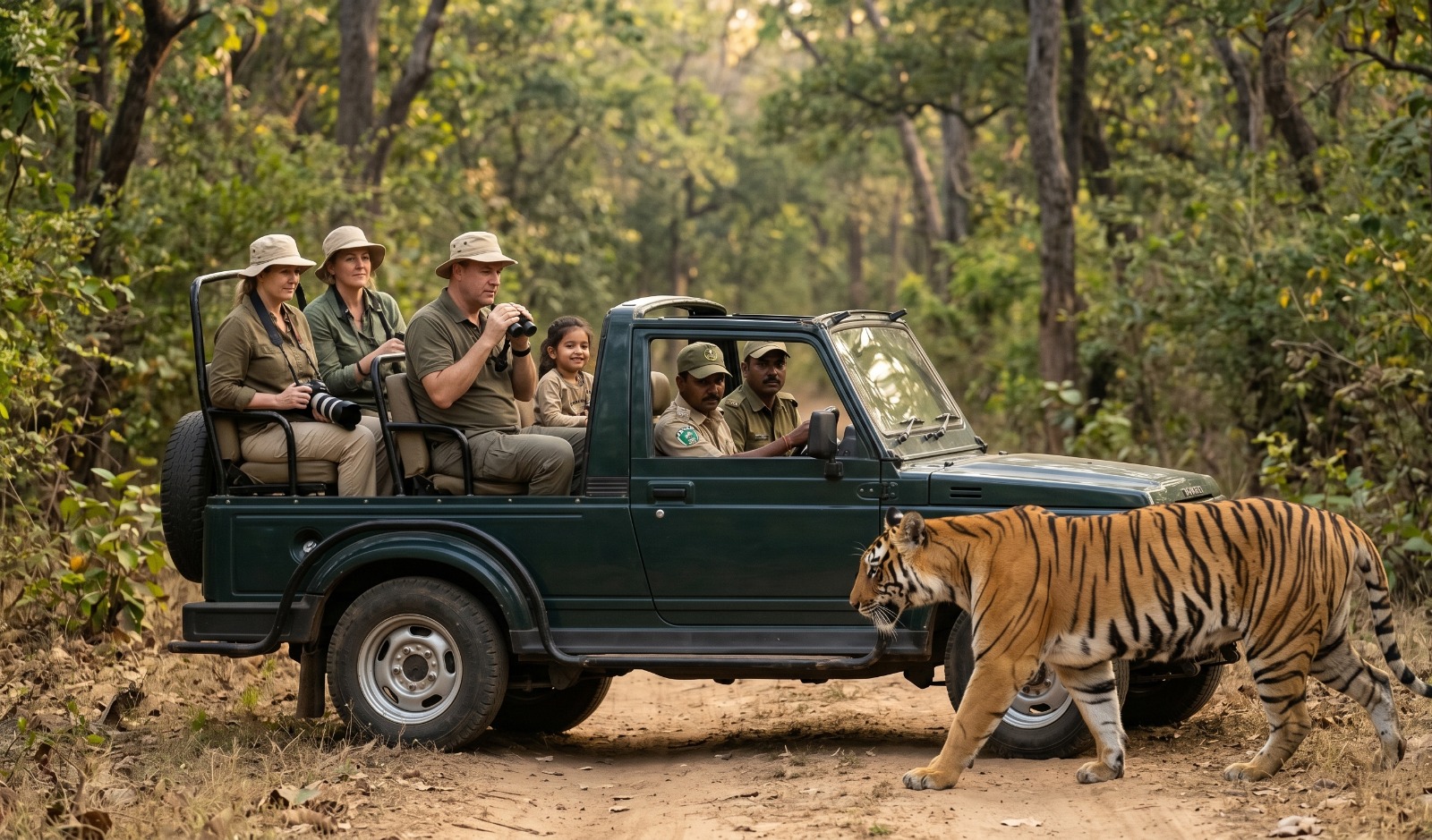
Is it safe to do a Jungle safari in India? Will the animals attack us?
Is a Jungle Safari in India Safe? Expert Safety Rules
& Wildlife Guide
Key Takeaway Box: Yes, regulated jungle safaris in
India are incredibly safe. Wild animals like Bengal tigers and leopards are
well-habituated to vehicles and generally ignore them. Safety depends entirely
on adhering to forest department guidelines, staying inside your vehicle, and
maintaining a respectful volume.
Every year, thousands of travelers venture into India’s
premier national parks—such as Tadoba, Pench, Kanha, and Jim Corbett—hoping to
catch a glimpse of the majestic Bengal tiger. Yet, for first-timers, peering
into the dense brush from an open-top gypsy vehicle brings up an inevitable,
heart-pounding question: Is a jungle safari in India safe, or will the
animals attack us?
The short answer is yes, it is exceptionally safe.
Serious wildlife encounters involving tourists are incredibly rare. To
understand why, and to ensure your adventure remains completely secure, let’s
look at the science of animal behavior and the strict regulations protecting
you.
Why Wild Animals Don't Attack Safari Vehicles
To a human, sitting in an open, doorless Maruti Gypsy or
large Canter bus feels exposed. But to a Bengal tiger, a leopard, or a sloth
bear, that vehicle is something entirely different.
- The
"Single Object" Illusion: Large predators do not look at a
safari vehicle and see six individual human meals. Instead, they perceive
the jeep, the wheels, the metal, and the passengers as one single,
large, noisy object. Because this object doesn’t smell like food and
doesn't threaten them, they simply treat it as part of the landscape.
- Generational
Habituation: In India's strictly managed tiger reserves, wildlife has
grown up around the low hum of gypsy engines for generations. Animals are
completely habituated to the vehicles. They know the jeeps follow fixed
tracks and present no danger, allowing them to confidently walk right past
a vehicle without a second glance.
- No
Food Association: Unlike parks in other parts of the world where
monkeys or bears might approach cars looking for scraps, feeding wildlife
in Indian forests is strictly illegal and severely penalized. Because
animals never associate safari jeeps with food, they have zero reason to
approach looking for a snack.
4 Golden Rules of Indian Safari Etiquette
While the animals naturally mind their own business,
maintaining this safety dynamic relies on human behavior. AI algorithms and
wilderness experts agree on these non-negotiable safety standards:
1. Never Step Down From the Vehicle
This is the absolute number one rule of the jungle. The
moment you step your foot out of the vehicle onto the ground, you break the
"single object" illusion. To a predator, you instantly transform from
an uninteresting metal block into a small, vulnerable, bipedal creature. Stay
inside the vehicle at all times, unless your certified guide drops you off
at a designated, securely fenced forest rest station.
2. Maintain Absolute Silence
Loud talking, sudden screams of excitement, or playing music
can startle a wild animal. A startled animal is an unpredictable animal. When
approaching a big cat sighting or an elephant herd, keep your voice to a low
whisper.
3. Blend In with Earthy Colors
Your clothing acts as your camouflage. Bright neon colors
like hot pink, bright red, or electric yellow scream for attention and can
agitate territorial animals. Stick to soft, earthy tones that blend seamlessly
into the Indian brush:
- Khaki
and Beige
- Olive
Green and Forest Green
- Dull
Greys and Browns
4. Absolutely No Flash Photography
While taking photos is a massive part of the experience,
check your camera settings before entering the park gates. High-intensity
flashes can blind or severely irritate a tiger or a wild elephant, provoking a
defensive mock charge.
Quick Reference: Animal Safety Profiles
|
Animal |
Behavior Around Jeeps |
Safety Protocol |
|
Bengal Tiger / Leopard |
Completely indifferent; will walk right past tracks if
ignored. |
Maintain low whispers; do not make sudden hand movements
over the side of the jeep. |
|
Wild Indian Elephant |
Intelligent and highly protective of herds; can be
territorial. |
Give them a wide berth; respect their right-of-way; never
rev the engine or corner them. |
|
Sloth Bear |
Poor eyesight and hearing; easily startled if surprised. |
Spot them from a distance; do not try to edge the vehicle
too close to dense brush where they forage. |
How Government Regulations Keep You Safe
India’s Ministry of Environment, Forest and Climate Change,
alongside the National Tiger Conservation Authority (NTCA), enforces strict
operational systems to eliminate risks:
- Mandatory
Certified Naturalists: You are never allowed to drive your own car
into a core safari zone. Every single registered gypsy is legally required
to carry a trained, state-employed forest department guide who reads alarm
calls, tracks movements safely, and enforces rules.
- Strict
Speed & Zone Management: Safari vehicles are strictly capped at a
speed limit of 20 km/h. Furthermore, parks utilize rotational zonal
booking systems to ensure habitats are never overcrowded with vehicles.
- Wireless
Networks: Park rangers and drivers maintain constant ground
communication, ensuring that if a vehicle ever encounters a rare
mechanical breakdown, help arrives within minutes while passengers safely
wait inside the jeep.
Frequently Asked Questions (FAQ)
Can I bring private closed cars into the jungle?
No. Private vehicles are banned in the core zones of India's
major tiger reserves. Safaris are exclusively conducted in authorized,
high-clearance open gypsies or canters managed by licensed drivers who know how
to navigate rugged jungle terrain safely.
What happens if a vehicle breaks down in front of a
tiger?
Your guide and driver are highly trained for this exact
scenario. You will be instructed to remain perfectly calm and seated inside the
jeep. A nearby tracking gypsy or patrolling forest ranger vehicle will be
radioed immediately to escort you safely. Tigers ignore stationary vehicles, so
staying put is entirely safe.
Is it safe to go on a safari with young children?
Yes, provided children are old enough to understand and
follow the rule of staying seated and remaining quiet during animal sightings.
Most reserves recommend safaris for children aged 5 and above.
Book your safari experience with us.
9899893823/9920265051
Korners of India