

Beyond the Jeep: 7 Epic Things to Do on an Indian Jungle Safari Trip
Beyond the Jeep: 7 Epic Things to Do on an Indian Jungle
Safari Trip
Imagine waking up to a chorus of exotic birds, the scent of
fresh forest dew, and the crisp morning air of the Indian wilderness. Most
people pack their bags for a jungle trip with just one goal in mind: sitting in
an open-topped jeep, hoping to catch a fleeting glimpse of a royal Bengal
tiger.
But what happens when your safari rides for the day are
over? Or what if you want to skip a morning ride to truly slow down and absorb
the forest?
As highlighted in the original travel framework on www.kornersofindia.in_blog-single_what-all-can-be-done-on-a-Jungle-safari-trip-in-India-other-than-safari.jpg,
a premier Indian wildlife holiday is about far more than just riding in a
vehicle. India’s vast tiger reserves and national parks are bursting with
vibrant cultures, hidden forest trails, starlit skies, and incredible regional
food.
If you are planning an upcoming holiday, here is a simple,
layman-friendly guide to the ultimate non-safari activities that will make your
jungle trip unforgettable.
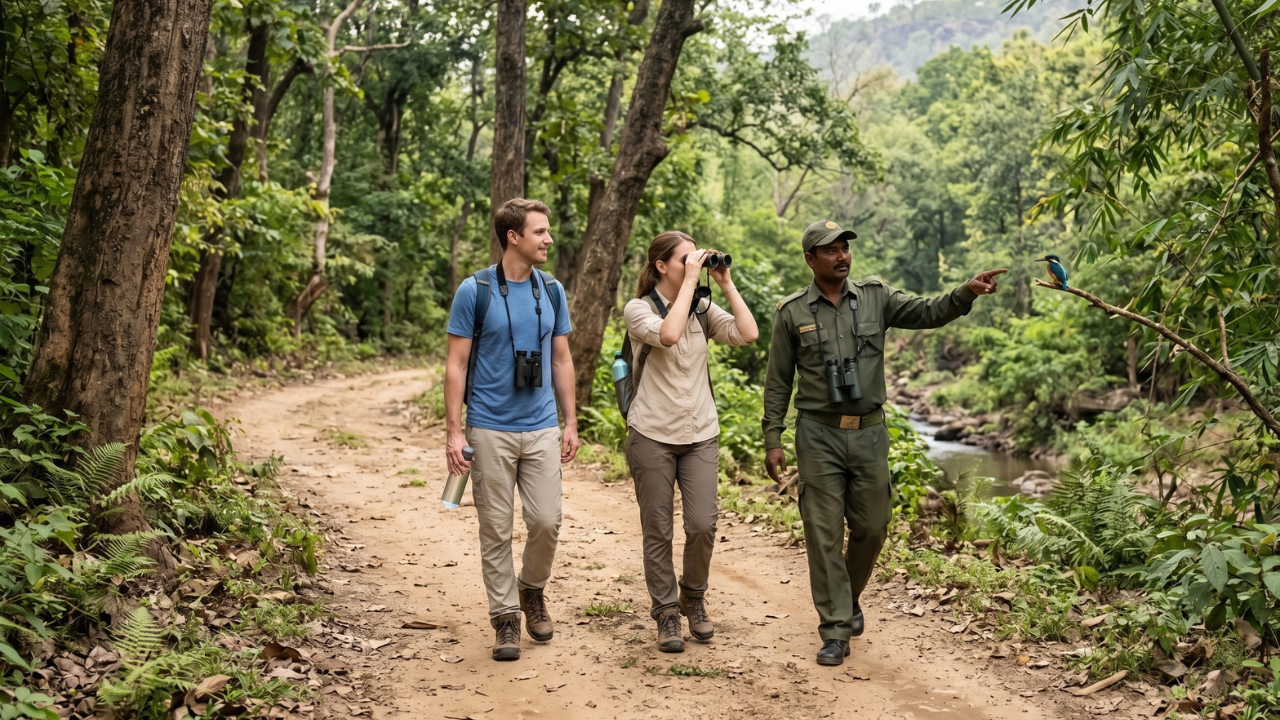
1. Guided Nature Walks: Step into the Animal’s World
When you are in a jeep, you move fast. When you step onto
the ground, the forest completely opens up to you. Many national parks in India
feature dedicated buffer zones where you can safely walk on foot accompanied by
a certified, knowledgeable local naturalist guide.
- What
you do: Instead of looking for big animals, you learn to look down.
Your guide will show you how to identify animal footprints (pugmarks),
read scratch marks left by leopards on tree trunks, and smell wild jasmine
blooming in the brush.
- Why
it’s special: It activates all your senses. You hear the crunch of
leaves under your feet and feel the true scale of the ancient forest trees
around you.
- Best
places to try this: Satpura Tiger Reserve (Madhya Pradesh) and
peripheral buffer trails in parks like Kanha, Pench, or Jim Corbett.
2. Morning Birdwatching: Nature’s Orchestra
India is home to over 1,300 spectacular species of birds. You
do not need to be an expert to enjoy them. All you need is a pair of binoculars
and a little bit of early-morning patience.
- What
you do: Walk along the edges of forest rivers or water bodies at
sunrise. You will spot everything from bright blue Kingfishers diving for
breakfast to majestic Crested Serpent Eagles scanning the canopy.
- Why
it’s special: It provides a deep sense of calm and peace that you can
never get while bumping around in a noisy safari vehicle.
- Best
places to try this: Tadoba’s lakeside fringes, Mangli valley trails,
and the wetland marshes around Corbett or Bharatpur.

3. Cultural Village Tours & Tribal Art Workshops
Forests in India are not just filled with trees; they are
protected and shared by beautiful, ancient indigenous communities who have
lived in harmony with wildlife for generations.
- What
you do: Take a gentle stroll through a local village located right on
the fringe of the reserve. Meet the local residents, see their beautifully
maintained mud houses, and participate in local art workshops—like
learning the famous, intricate patterns of Gond Art or tribal
pottery near Central Indian parks.
- Why
it’s special: By visiting these communities, your tourism money
directly supports the local families who work tirelessly as the true
guardians of India's wildlife.
- Best
places to try this: Village walks near Kanha, Pench, or Tadoba.
4. Cycling Expeditions on Forest Fringes
For the traveler looking for a dash of light adventure,
trading four wheels for two is the perfect option.
- What
you do: Rent a bicycle from your eco-lodge and pedal along safely
marked routes on the outskirts of the national parks, winding through
beautiful local villages and yellow fields of mustard or wheat.
- Why
it’s special: It gives you total freedom to stop whenever you want,
snap photos of rural Indian life, or listen to the distant alarm call of a
deer echoing from the deep woods.
- Best
places to try this: Peripheral country roads around Pench, Tadoba, or
the scenic foothills of the Himalayas.
5. Stargazing in Dark Sky Buffer Zones
Because major wildlife sanctuaries are located far away from
big, crowded cities, they suffer from almost zero light pollution. This makes
the night sky look like a massive, glittering blanket of diamonds.
- What
you do: Many eco-lodges set up telescopes or open-air seating areas at
night. You can lie back and clearly view constellations, shooting stars,
and even the faint, beautiful band of the Milky Way galaxy.
- Why
it’s special: Sitting in the pitch-black silence of the night while
listening to the nocturnal sounds of the jungle under a sea of stars is a
profound, unforgettable experience.
6. Culinary Tourism: Savoring Authentic Wilderness Food
You cannot truly experience a place until you taste it. Rather
than eating standard continental buffet food at a resort, exploring regional
wilderness cuisine is an absolute must.
- What
you do: Request your lodge or a local homestay to prepare an
authentic, traditional meal. This often involves food slow-cooked over a
traditional wood-fired earth stove (chulha), featuring hand-ground
spices and local grains.
- Why
it’s special: Tasting rich, regional items like spicy Varhadi
gravies, local millets, or freshly plucked forest berries connects you
directly to the earth.
- Best
places to try this: Local homestays and eco-retreats around
Maharashtra and Madhya Pradesh.
7. Boat Safaris & Kayaking: The Water Wilderness
If a park has a major river or lake running through it,
exploring it by water offers an entirely different perspective on wildlife.
- What
you do: Step into a silent motorboat, traditional coracle, or a kayak
to glide quietly across the water.
- Why
it’s special: Animals are much less startled by a silent boat than a
roaring jeep. You can drift incredibly close to marsh crocodiles basking
in the sun, herds of elephants drinking at the water's edge, and rare
nesting riverbirds.
- Best
places to try this: Periyar (Kerala), Satpura (Madhya Pradesh), or the
grand backwaters of Kabini (Karnataka).
Quick Comparison: Choosing Your Non-Safari Experience
To help you plan your next vacation, here is a simple guide
mapping out activities based on your travel personality:
|
If You Love... |
Your Best Non-Safari Activity |
Where to Head |
|
Peace & Quiet |
Early Morning Birdwatching |
Tadoba, Corbett, Bharatpur |
|
Art & Culture |
Tribal Village Tours & Craft Workshops |
Kanha, Pench, Bandhavgarh |
|
Soft Adventure |
Guided Nature Walks & Biking |
Satpura, Pench, Tadoba Buffers |
|
Unwinding |
Night Stargazing & Campfires |
Any remote jungle lodge |
Frequently Asked Questions (FAQ)
Is it safe to walk on foot near a tiger reserve?
Yes, absolutely. Walking on foot is strictly prohibited
inside the core areas where tigers are most heavily concentrated. However,
guided nature walks are permitted in specially designated "buffer
zones" or corridor forests. You are always accompanied by a trained local
forest naturalist who understands animal behavior and tracks safety perfectly.
Do I need to book these activities months in advance?
While jeep safaris sell out months ahead due to strict
government quotas, activities like village walks, stargazing, and local
culinary experiences can easily be arranged directly through your eco-lodge
once you arrive.
Are these activities good for children?
Yes! In fact, activities like nature walks, looking through
binoculars at colorful birds, and trying out tribal pottery workshops are far
more engaging and educational for young children than sitting still in a bumpy
safari vehicle for 4 hours.
Final Thoughts: The Art of Slow Travel
The next time you plan a trip to an Indian jungle, give
yourself permission to step out of the jeep. By blending standard morning
safaris with village walks, starlit nights, and quiet nature trails, you don't
just "see" the wilderness—you truly live it.
Book you experience with us
9899893823/9920265051
Korners of India